
By Mahanaim Imdad
Coral reefs stand as one of Earth’s most biodiverse ecosystems, offering a multitude of ecosystem services that hold immense significance for human well-being, encompassing areas such as fisheries, tourism, aesthetics, and cultural values. It wasn’t until 1988 that the presence of coral reefs in Pakistan was acknowledged, as the coastal environment of the country was previously believed to be unsuitable for the development and establishment of coral reef formations.
Coral Reefs: Nature’s Underwater Marvels
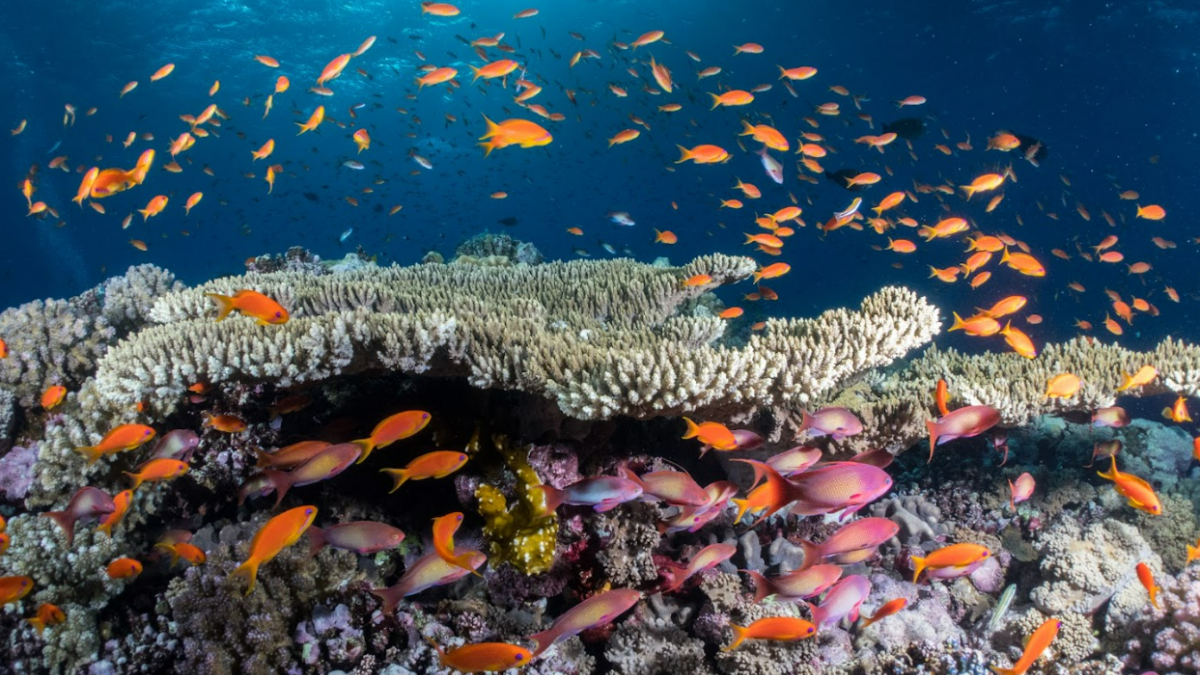
Imagine a world beneath the waves where vibrant coral formations create intricate landscapes, providing shelter and sustenance for an incredible array of marine species. Coral reefs are the ocean’s bustling cities, bustling with life and activity. These delicate ecosystems consist of colonies of tiny animals called coral polyps, which, over centuries, build calcium carbonate skeletons that form the foundation of the reef. Pakistan’s coral reefs, while less famous, are equally mesmerizing with a total of 38 Species of coral reefs along the Sindh and Balochistan Coast.
Biodiversity Hotspots: Pakistan’s Coral Reefs Unveiled
Pakistan’s coastal waters are home to several distinct coral reef ecosystems extending from Sindh Coast to Balochistan Coast that deserve the spotlight. The known sites for the coral reef of Pakistan include Astola Island, Churna Island Reef Complex, Gawadar Bay Reef system, Jiwani, and Ormara,
These sites are a hotspot for divers and marine enthusiasts, and is a home to a variety of corals and fish, supporting local fisheries and sustaining coastal communities.
Underlying Threats to Pakistan’s Coral Reefs
Despite their natural resilience, Pakistan’s coral reefs face a range of threats that jeopardize their survival, mostly due to anthropogenic activity and also due to natural disasters. Rising sea temperatures due to climate change lead to coral bleaching. Many corals are harvested to make jewelry and Greek or Ayurvedic medicines that are sold in local markets. Various human activities, notably marine pollution, oil spills, overfishing, discharge of industrial effluents, runoff from agriculture, coastal development, water pollution, increasing sea surface temperatures, and sedimentation, collectively contribute to the environmental challenges that our marine treasures are currently confronting.
Conservation Initiatives and Sustainable Management
Efforts are underway to safeguard Pakistan’s coral reefs and the marine life that they support, designated areas with critical reef habitats are being protected from destructive activities, Astola Island is Pakistan’s first marine protected area. Local communities in reef conservation help build a sense of ownership and responsibility. Vital insights about the health and resilience of coral reefs are being provided by ongoing research and monitoring.
The Way Forward: Preserving Pakistan’s Coral Reefs for Future Generations
Enhancing environmental education among citizens is very important. This includes increasing public awareness regarding the preservation of coral reef ecosystems and intensifying community engagement in these efforts, promoting sustainable fishing practices, reducing carbon emissions, and supporting local conservation initiatives that can make a difference. Environmental protection agencies must enforce more strict regulations for the release of industrial wastewater and pollutants. This entails establishing comprehensive systems for monitoring and managing pollutants, while also regulating the transportation of diverse sediment types. Concurrently, local governments need to exercise strict control over the utilization of resources linked to coral reefs.
Pakistan’s coral reefs may be hidden from the world’s gaze, but they are no less deserving of our attention and care. As we unravel the mysteries of these underwater havens, let’s unite in a collective effort to protect and conserve them for generations to come. By championing sustainable practices and fostering a deeper understanding of the delicate balance that coral reefs uphold, we can ensure that these extraordinary ecosystems continue to thrive beneath the waves.
Leave a Reply